Image & video · Flux, Midjourney, SDXL · 7 min read
Editorial fashion with AI: camera angles, fabric and light for a full lookbook
Eight setups a fashion photographer actually uses, from worm's-eye hero shots to direct-flash backstage, with prompts you can copy.
Who this is for
Virtual stylists, small fashion brands and art directors who need a set of looks that feel like one shoot. The trick is to keep the light, lens and fabric words specific and change only one thing per shot: the angle, the garment or the expression.
Formula
Keep the model line identical in every prompt and swap the rest.
Editorial fashion photograph of [model line: age, hair, eyes, skin].
Wearing [garment + fabric + finish].
Camera: [angle], [focal length], f/[aperture].
Light: [one named source].
Setting: [backdrop or location].
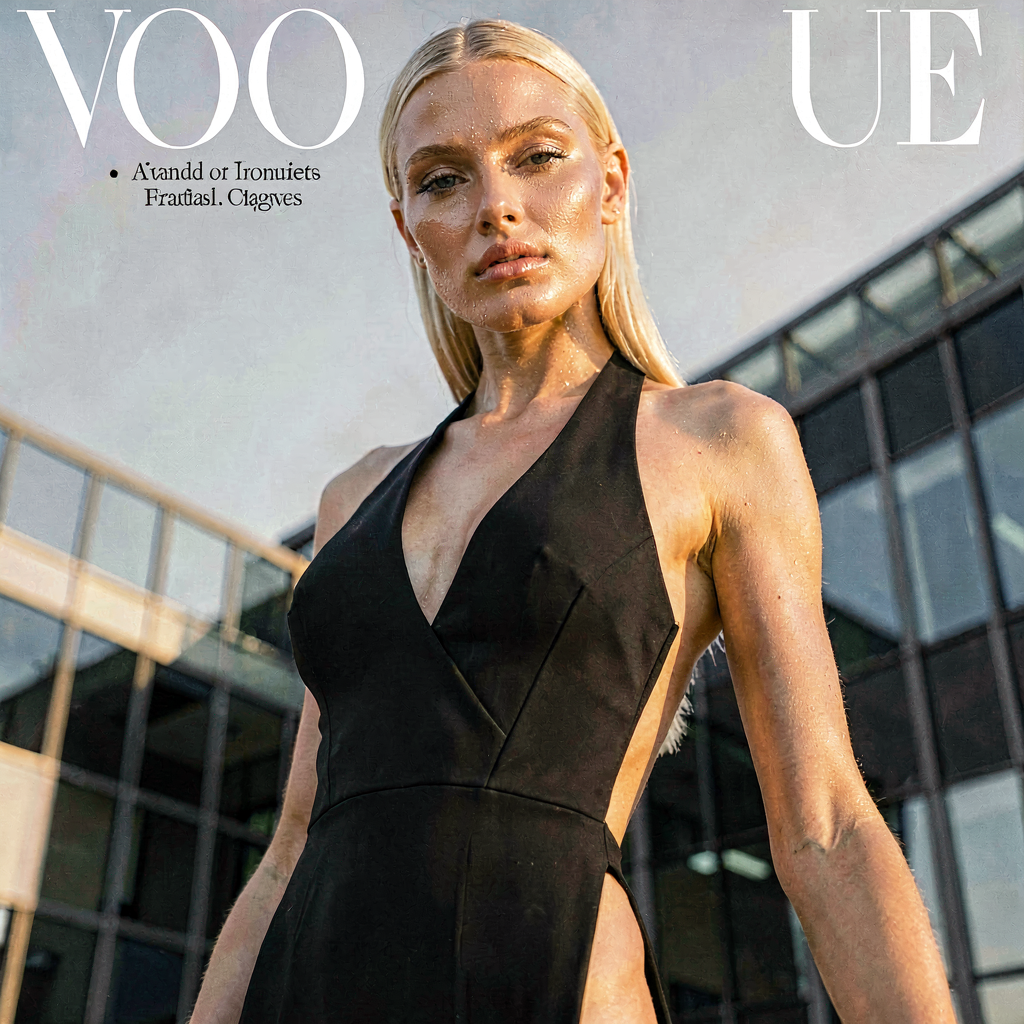
Worm's-eye hero shot
Shoot from knee height with a 35mm lens, not wider: 24-28mm stretches the body. Ask for direct eye contact or the model looks over the camera. Models love adding magazine titles here, and the letters come out garbled.
Low-angle editorial fashion photograph from knee height of a young blonde woman with slicked-back hair, direct eye contact with the camera, black halter gown with a deep neckline, modern glass building behind, warm late sun, 35mm, f/4, no text.
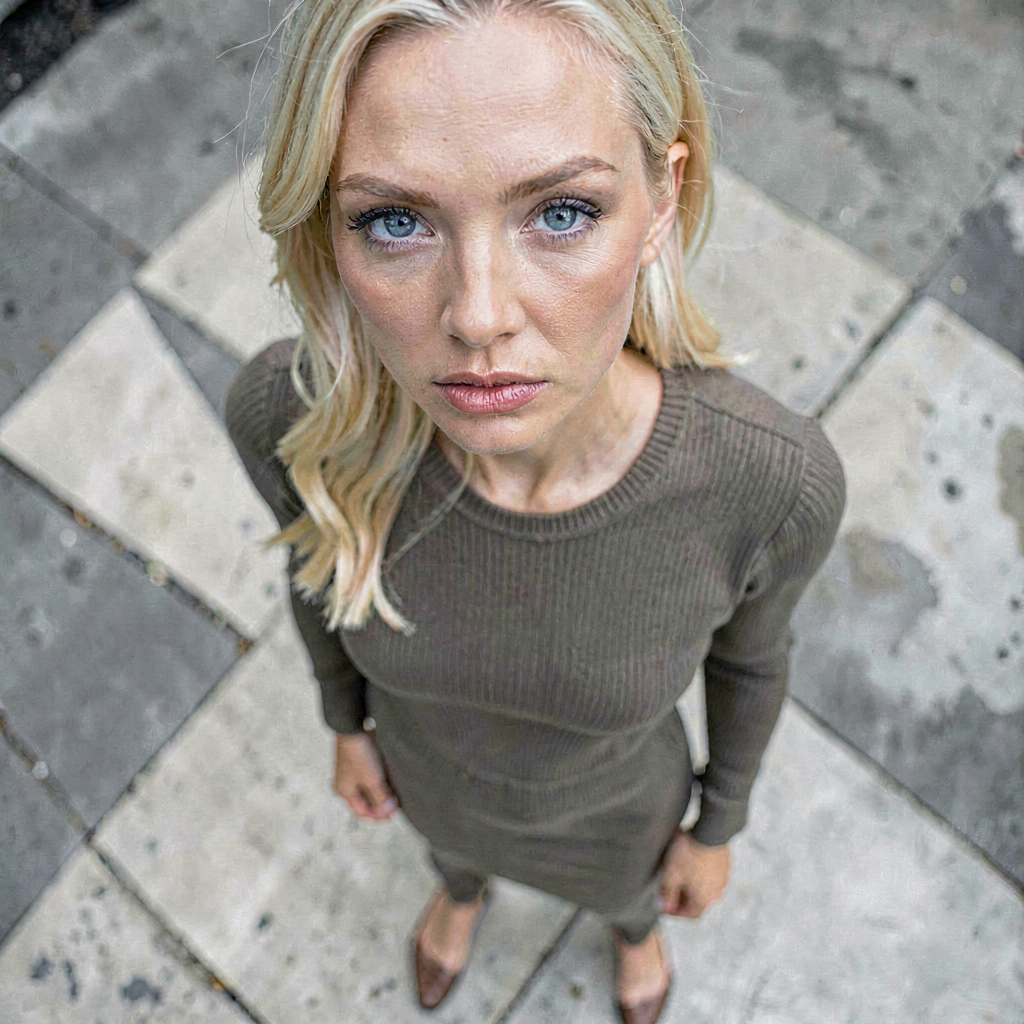
High-angle forced perspective
Camera above, wide lens, model looking up. The head grows and the body shrinks, which is the point. Use a patterned floor so the perspective reads.
High-angle editorial photograph shot from directly above with a 24mm lens, young blonde woman looking straight up into the camera, olive ribbed knit dress, diagonal stone pavers, overcast soft light, f/5.6.
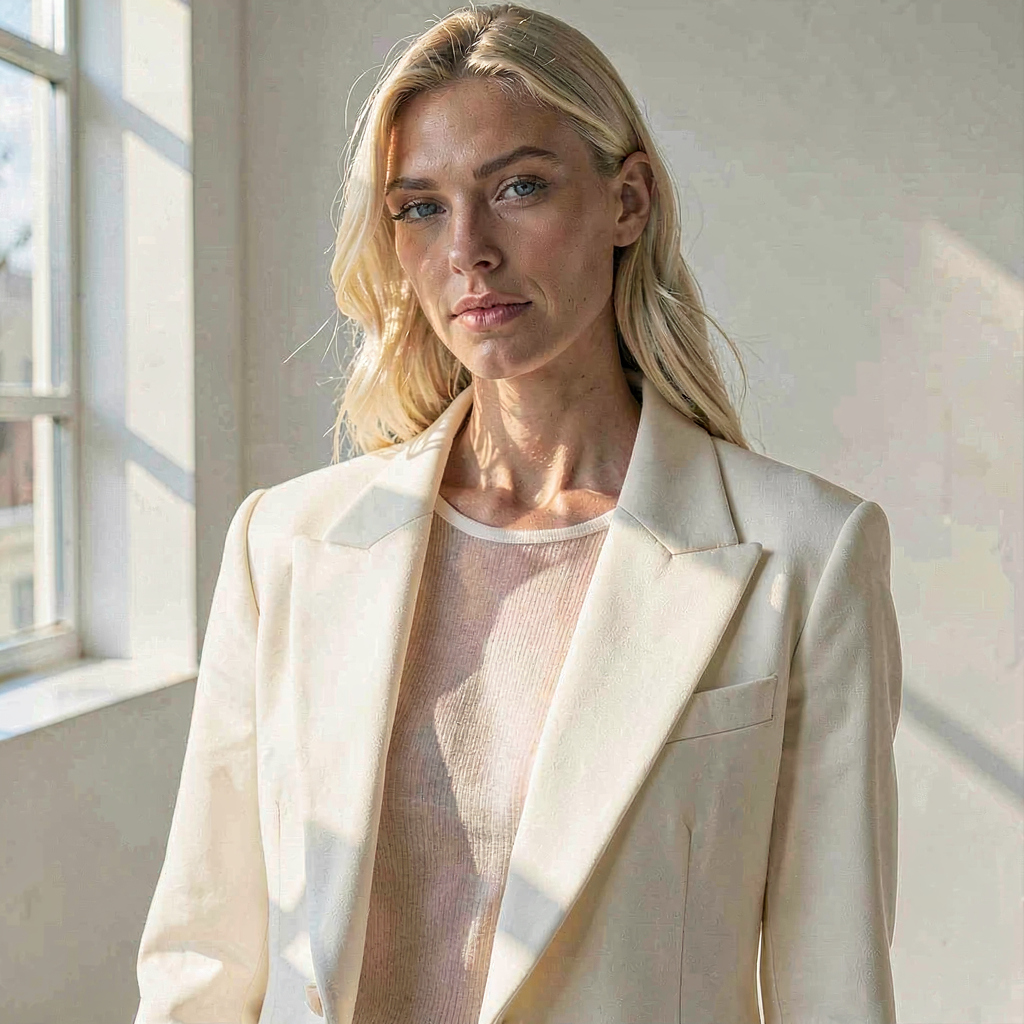
Tailoring in window light
Structured garments need side light so lapels and seams cast small shadows. A sheer inner layer adds a second texture.
Editorial portrait of a young blonde woman, ivory structured blazer with peak lapels over a sheer ribbed knit top, bright window light from the left casting soft shadows on a white wall, 85mm, f/2.8, calm expression.
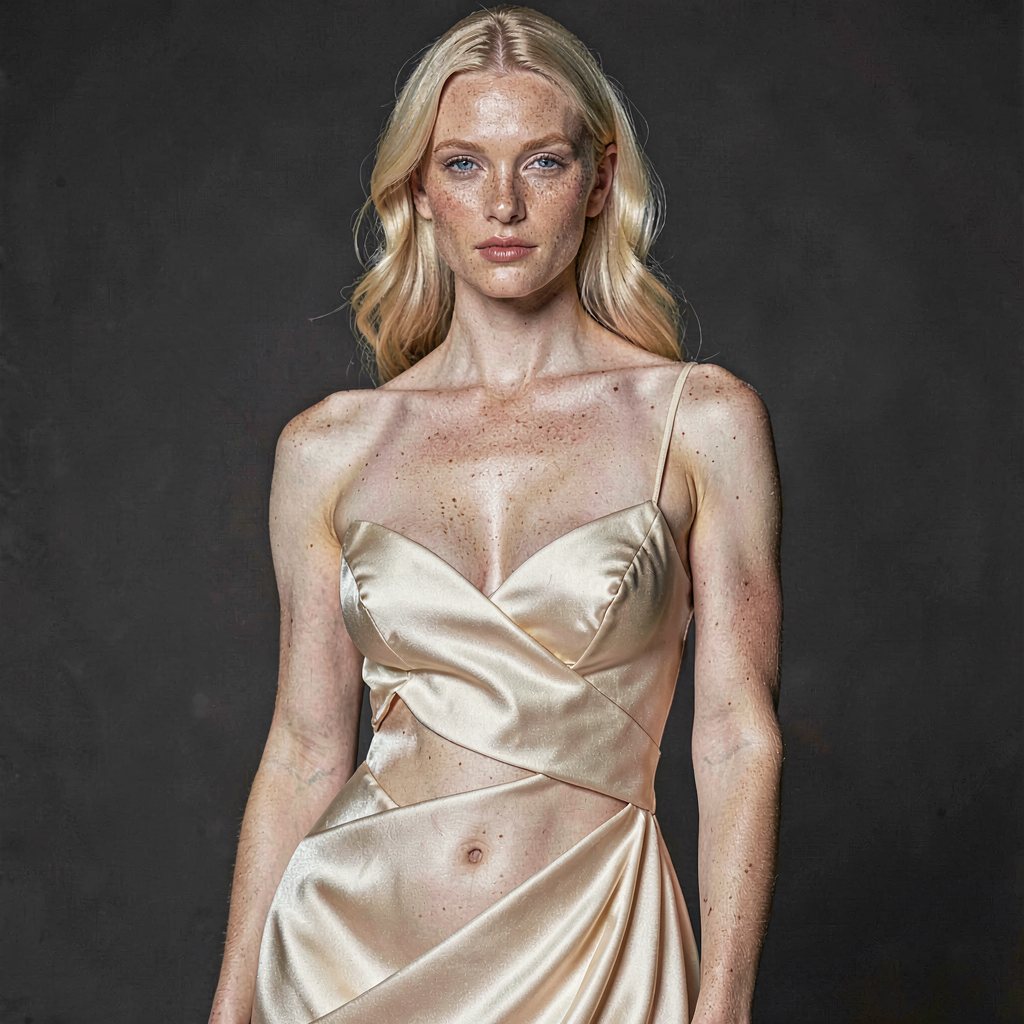
Liquid drape and sheen
Satin is a reflection, not a color. A dark backdrop and one soft key give the long highlights that make silk read as silk.
Studio fashion photograph of a young blonde woman with freckles and blue-grey eyes, champagne silk satin gown with a wrapped cutout bodice, single large softbox from camera left, charcoal backdrop, 85mm, f/4.
Mixed textures
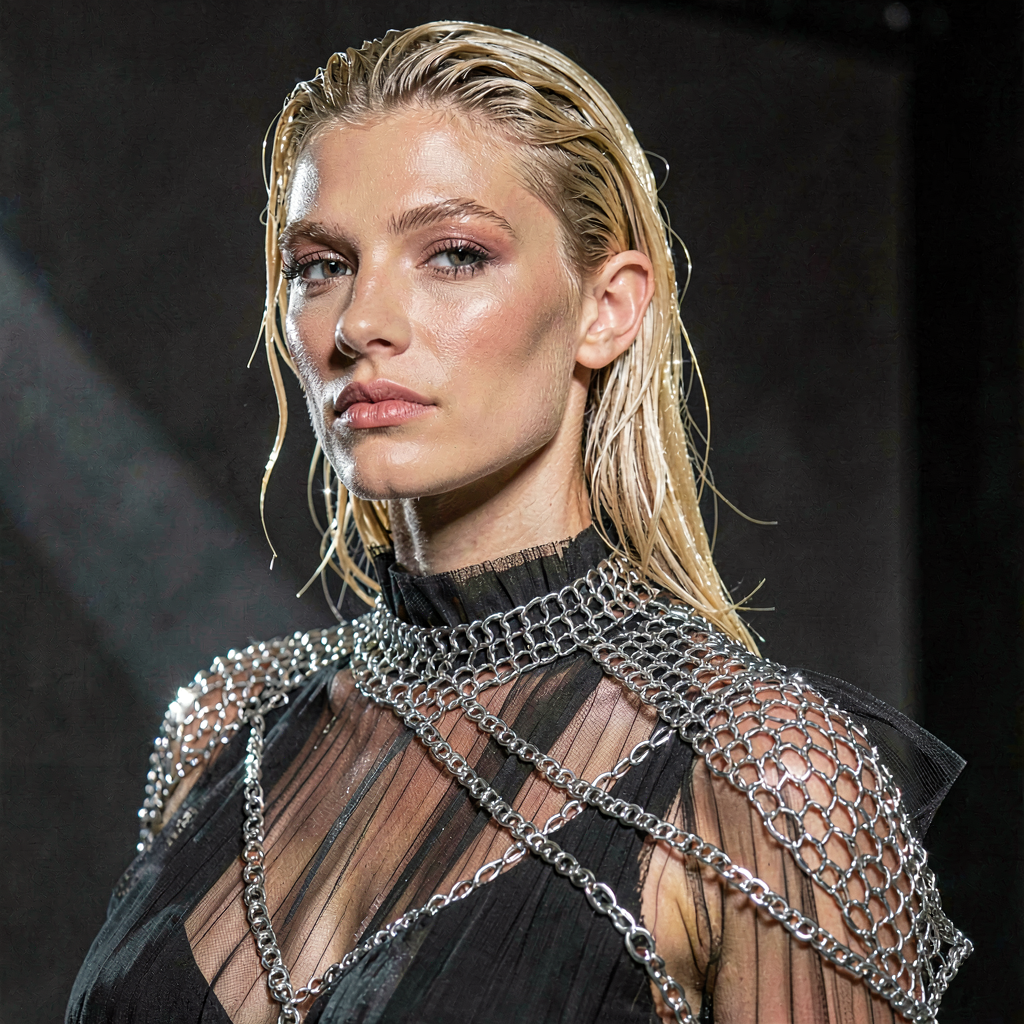
Put a hard material on a soft one. Chainmail over pleated tulle gives the model two different things to render and the contrast carries the frame.
Runway close-up of a young blonde woman with wet-look slicked hair, silver chainmail shoulder harness over sheer black pleated tulle with a high neck, dark runway background, spotlight from above, 100mm, f/2.8.
Direct-flash backstage
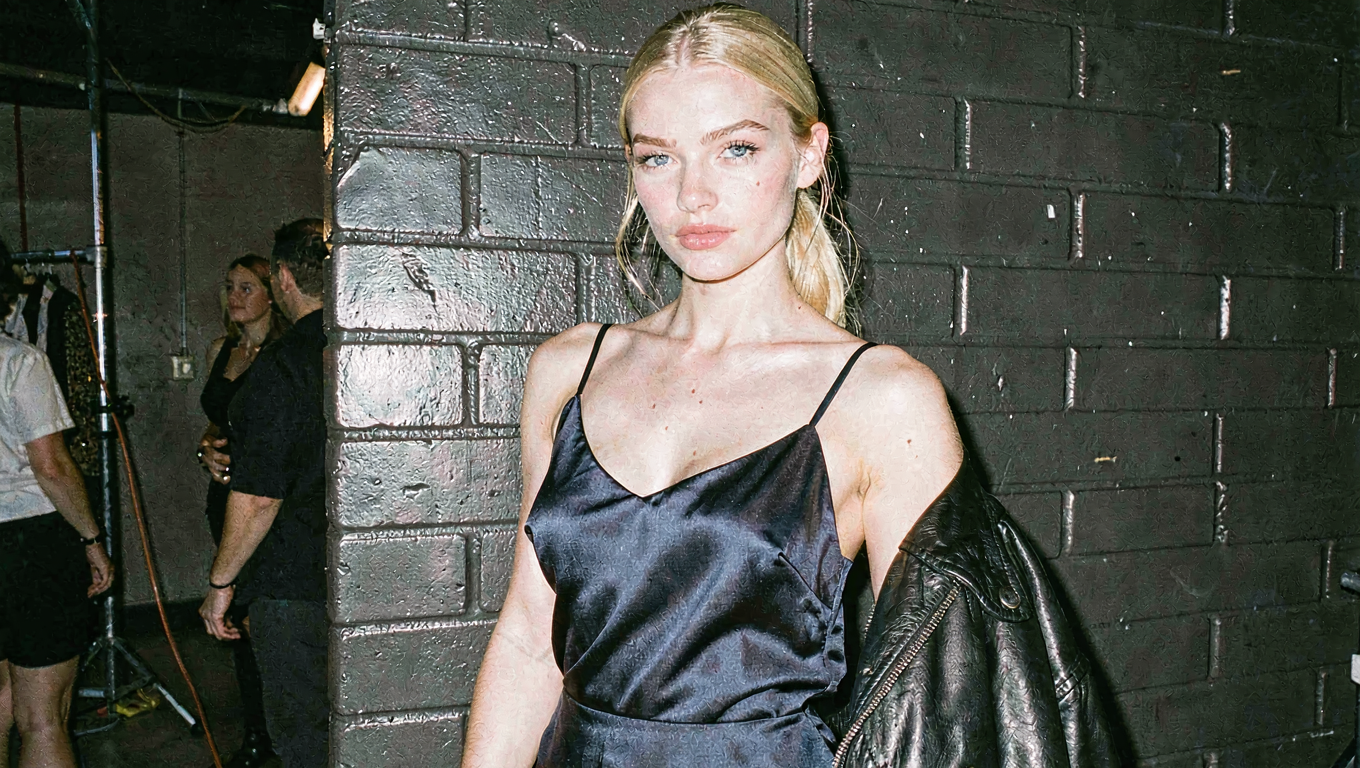
On-camera flash flattens the face, throws a hard shadow and darkens the room: instant documentary feel. Widescreen leaves space for the backstage crowd.
Backstage snapshot with direct on-camera flash of a young blonde woman leaning on a painted black brick wall, navy satin slip dress, black leather biker jacket over one shoulder, crew blurred behind, 35mm film grain.
Macro beauty and metal
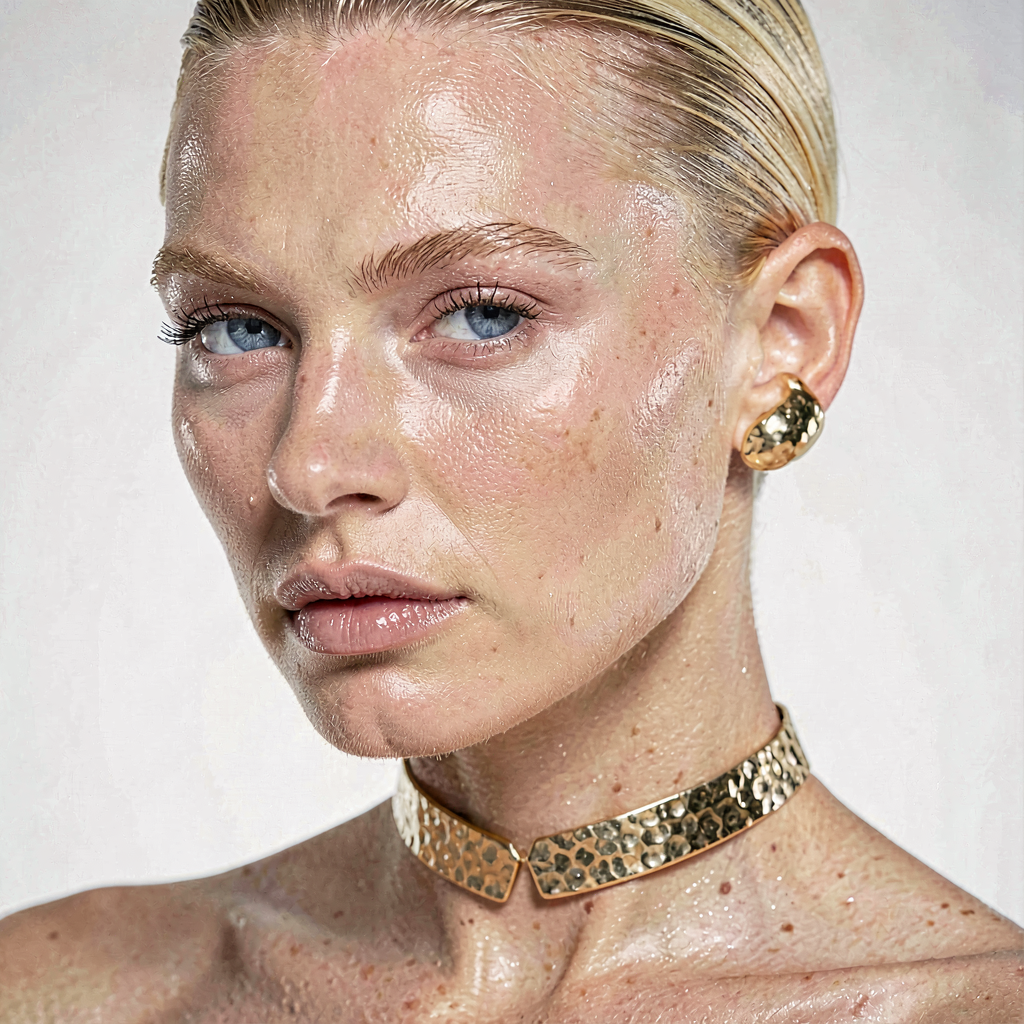
For jewelry, go close and name the metal finish. "Hammered gold" gives facets that catch light; a pale backdrop keeps it clean. Watch the skin: wet-look words can push it into heavy texture.
Beauty close-up of a young blonde woman with blue eyes and light freckles, hair slicked back, hammered gold choker and dome earring, pale grey backdrop, soft frontal light, 100mm macro, f/5.6, smooth youthful skin.
Soft knit and expression
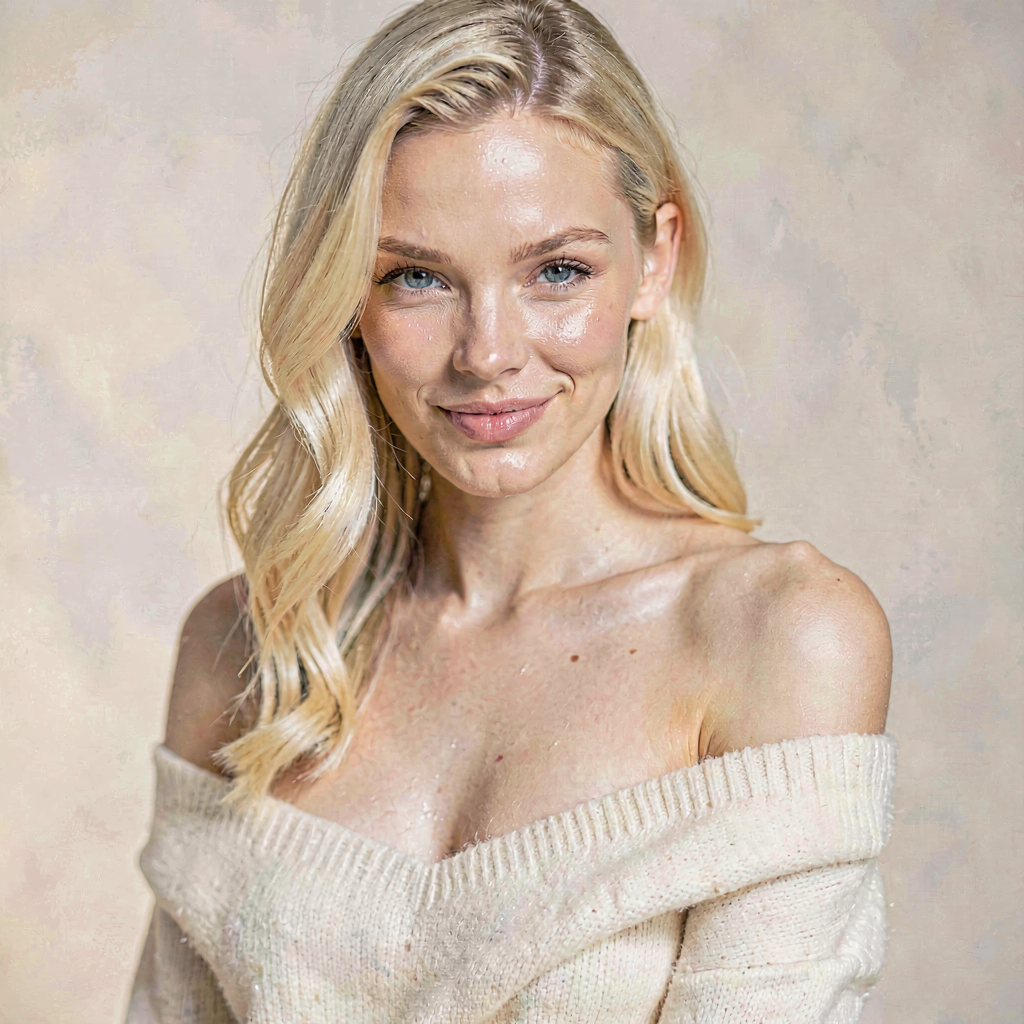
Expressions break easily. Ask for one small change, like a slight closed-mouth smile, and keep hands out of the frame.
Portrait of a young blonde woman with loose waves, cream chunky off-shoulder knit sweater, slight closed-mouth smile, warm painted backdrop, soft diffused light, 85mm, f/2.8, smooth youthful skin, hands out of frame.
Honest limit
Look closely and the face changes between shots. Repeating the same description keeps the type of person close, not the person. For one exact face across a lookbook, use a reference image (PuLID, InstantID), a trained LoRA, or a face swap on your best frames.
Know a trick other creators should learn?