Image & video · FLUX · 6 min read
The Material Physics Playbook: Killing the AI Plastic Look Without Film Grain
Replace generic quality buzzwords and heavy 35mm grain with explicit optical coatings, surface tension, and subsurface depth in local FLUX.
Why film grain is a crutch
The standard reflex for fixing waxy, plastic AI renders is burying them under "heavy 35mm film grain, Kodak Portra, dusty scan." Grain hides the plastic sheen, but it also destroys micro-contrast and optical clarity. Local FLUX models already understand real-world material physics—if you prompt the light interaction, surface tooling, and liquid boundaries instead of buzzwords like "8k hyperrealistic."
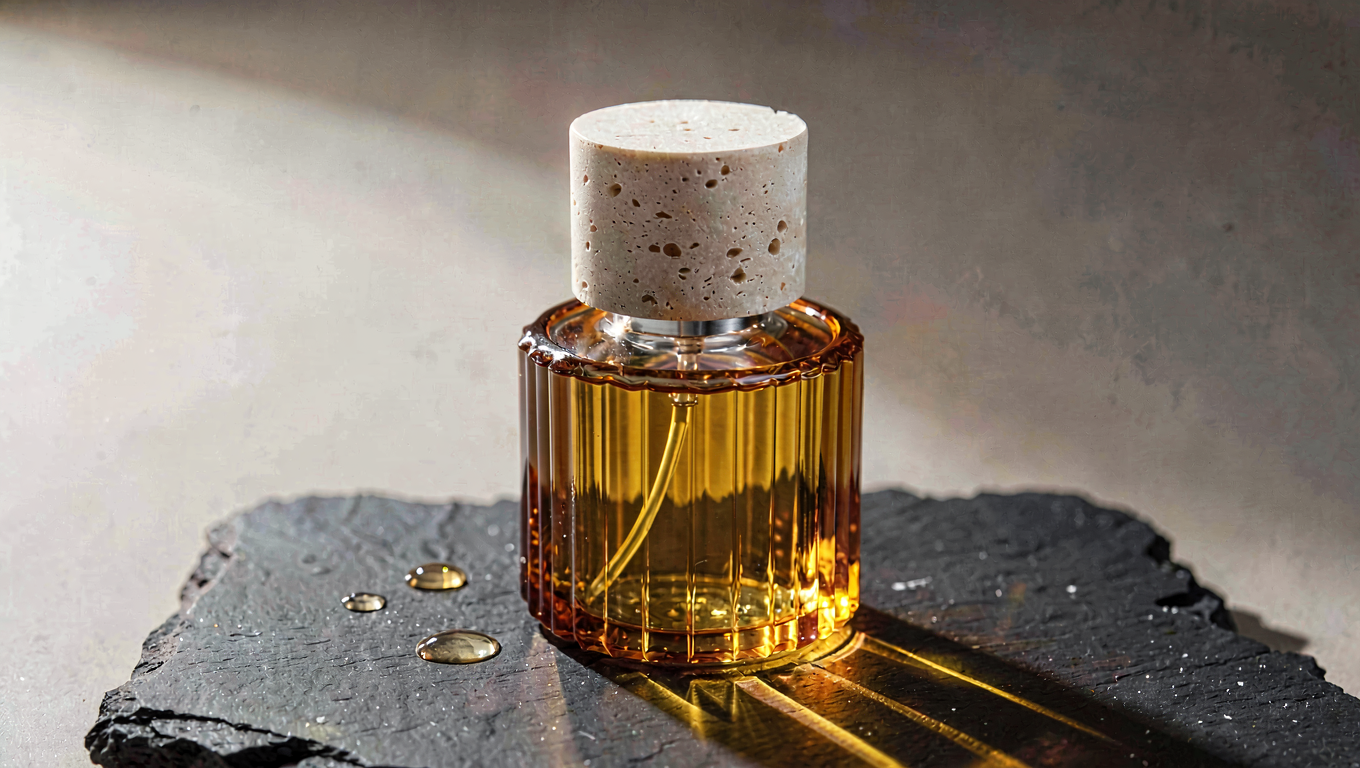
01. Fluted glass caustics & porous stone
Glass looks synthetic when it has nothing to refract onto. Pairing ribbed amber glass with wet volcanic basalt gives the model a dark, matte surface to catch golden caustic streaks, while porous travertine and spherical water droplets anchor physical scale.
Macro editorial photograph of a minimalist cylindrical fluted amber glass perfume bottle with an unpolished porous travertine stone cap resting on wet black basalt stone. Crisp golden caustic light patterns refract through the ribbed glass onto the damp dark stone surface. Two tiny, clean spherical water droplets cling to the side of the glass. Soft directional afternoon sunlight, 90mm macro lens at f/4, shallow depth of field, tactile mineral realism, zero noise.
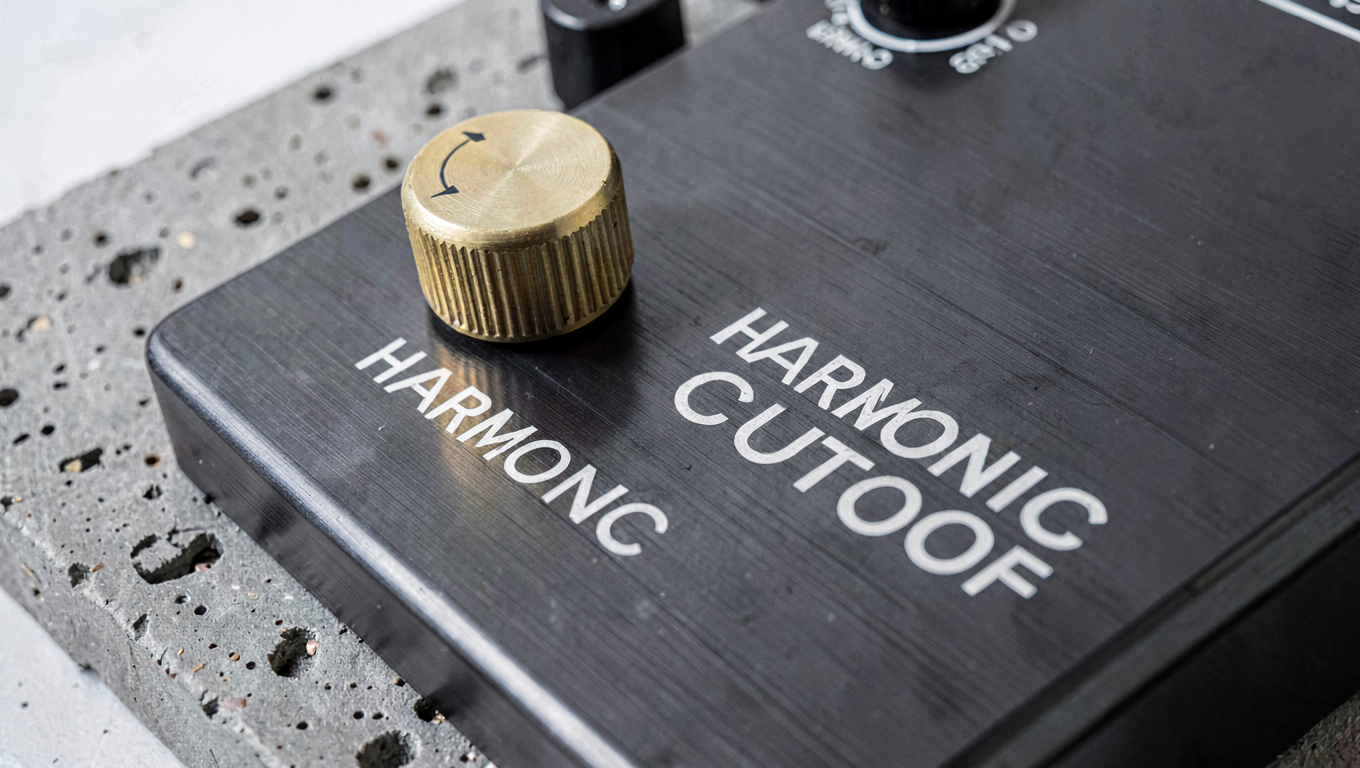
02. Knurled brass & anodized matte metal
Naming the exact machining process—diamond knurling, brushed anodized aluminum, laser-etched scale—forces tight mechanical tolerances and realistic specular rolloff instead of smooth CG chrome.
Macro product photograph of an industrial audio synthesizer module. A single solid knurled brass rotary potentiometer knob with fine diamond knurling pattern catching warm rim lighting. The knob is mounted on a matte brushed slate-gray anodized aluminum faceplate with laser-etched scale markings from 0 to 10 and a miniature toggle switch in the background. Ultra-sharp focus on the brass knurling, subtle specular rolloff, zero grain, lifelike optical clarity.
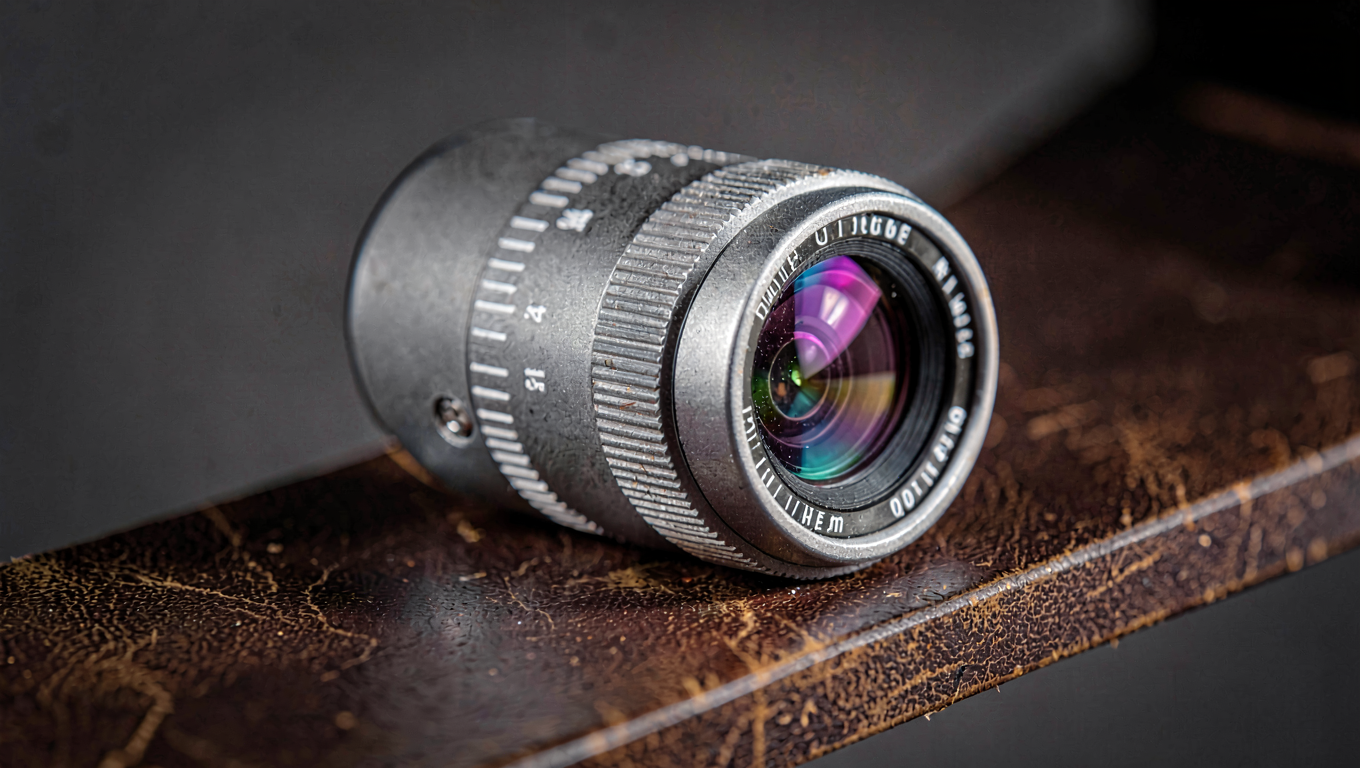
03. Multi-coated optics & bead-blasted titanium
Real camera glass never reflects pure white. Specifying an anti-reflective multi-coating with faint magenta and emerald-cyan stripbox reflections immediately sells optical glass over distressed Horween leather.
An extreme close-up macro studio photograph of an uncapped bespoke 50mm manual camera lens element resting on a strip of distressed dark brown Horween leather. The barrel is crafted from bead-blasted matte gray titanium with fine knurled focus rings and razor-sharp laser-engraved white distance markings reading "1.4" and "0.5m". The front optical glass element has an authentic anti-reflective multi-coating showing faint magenta and emerald-cyan specular reflections of an overhead studio stripbox. In the background, soft optical bokeh dissolves smoothly into dark graphite. Shot on 100mm macro lens at f/4, clean micro-contrast, zero noise, pristine optical clarity.
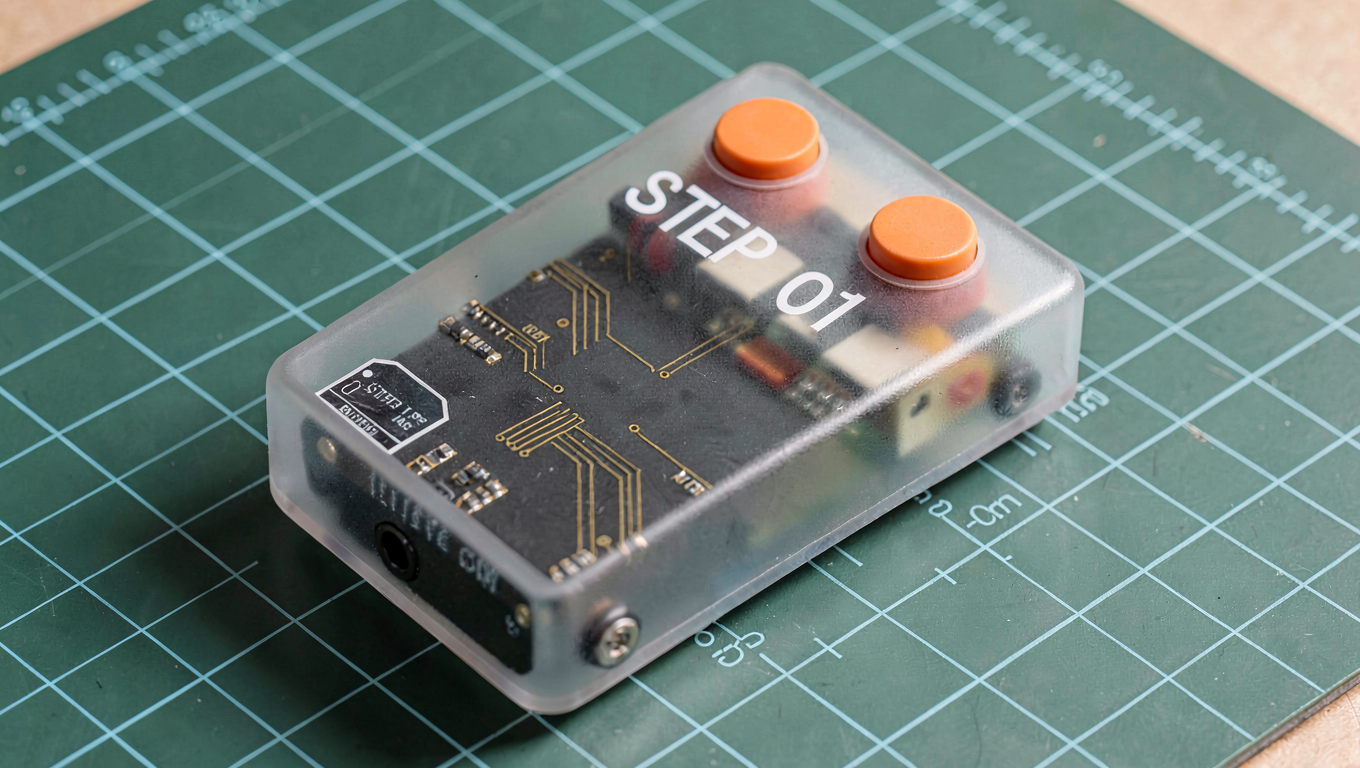
04. Frosted translucency & internal PCB depth
Semi-translucent polycarbonate is a brutal test for diffusion models because it requires spatial depth behind a diffused surface. Describing the recessed silhouette of gilded gold PCB traces underneath the frosted shell creates genuine subsurface diffusion.
An editorial product photograph of a minimalist handheld synth gadget with a semi-translucent frosted smoky polycarbonate casing. Through the diffused matte casing, the faint silhouette of an interior matte-black circuit board with fine gilded gold traces and surface-mount components is visible with realistic depth. The top face features two recessed matte orange silicone buttons and a crisp white sans-serif label reading "STEP 01". The device rests flat on a self-healing green grid drafting mat with subtle centimeter measurement lines. Lit with a soft 60cm directional diffused key light from the side, creating soft shadows and subtle internal light diffusion. Shot on 85mm lens at f/5.6, clean industrial design staging, lifelike texture fidelity.
05. Crackle celadon glaze & liquid meniscus
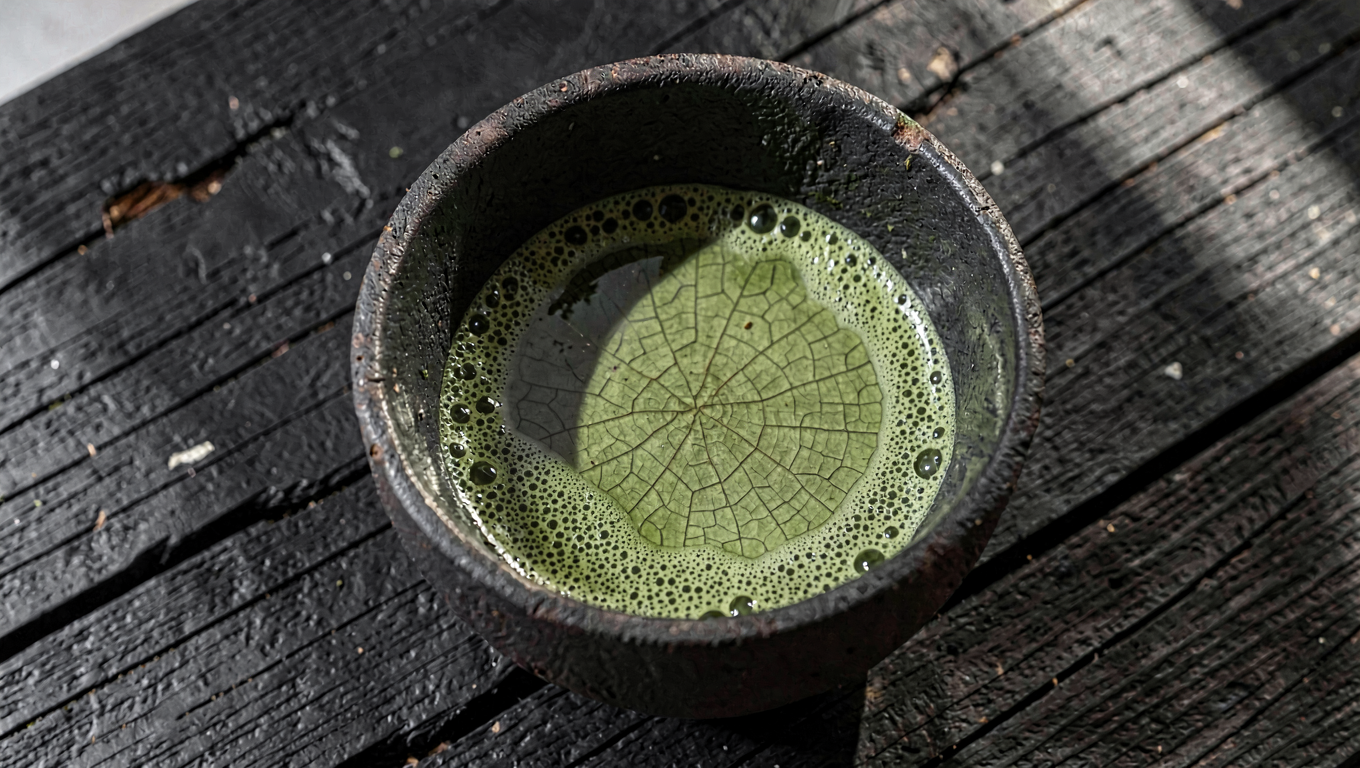
Layering four distinct textures in one frame—charred Shou Sugi Ban cedar, rough iron-rich stoneware, hairline crackle glaze, and microscopic tea foam—keeps the model from flattening the image into a uniform texture.
A top-down 45-degree angle studio photograph of a handcrafted Japanese ceramic matcha bowl (chawan). The exterior is made of rough, unglazed dark iron-rich stoneware with coarse tactile sand grit, while the interior features a glossy pooled celadon crackle glaze with fine hairline fissures. Inside the bowl is rich, vibrant ceremonial green whisked matcha with a delicate surface layer of microscopic frothy foam bubbles and a subtle meniscus clinging to the rim. The bowl rests on deep black charred Shou Sugi Ban cedar wood with deep alligator grain cracks. Lit by soft natural directional window light from the upper right, casting gentle specular glints on the glazed rim and matte shadows in the wood crevices. Shot on 90mm macro at f/4.5, authentic wabi-sabi realism.
06. Crystalline snap fracture & viscous fluid
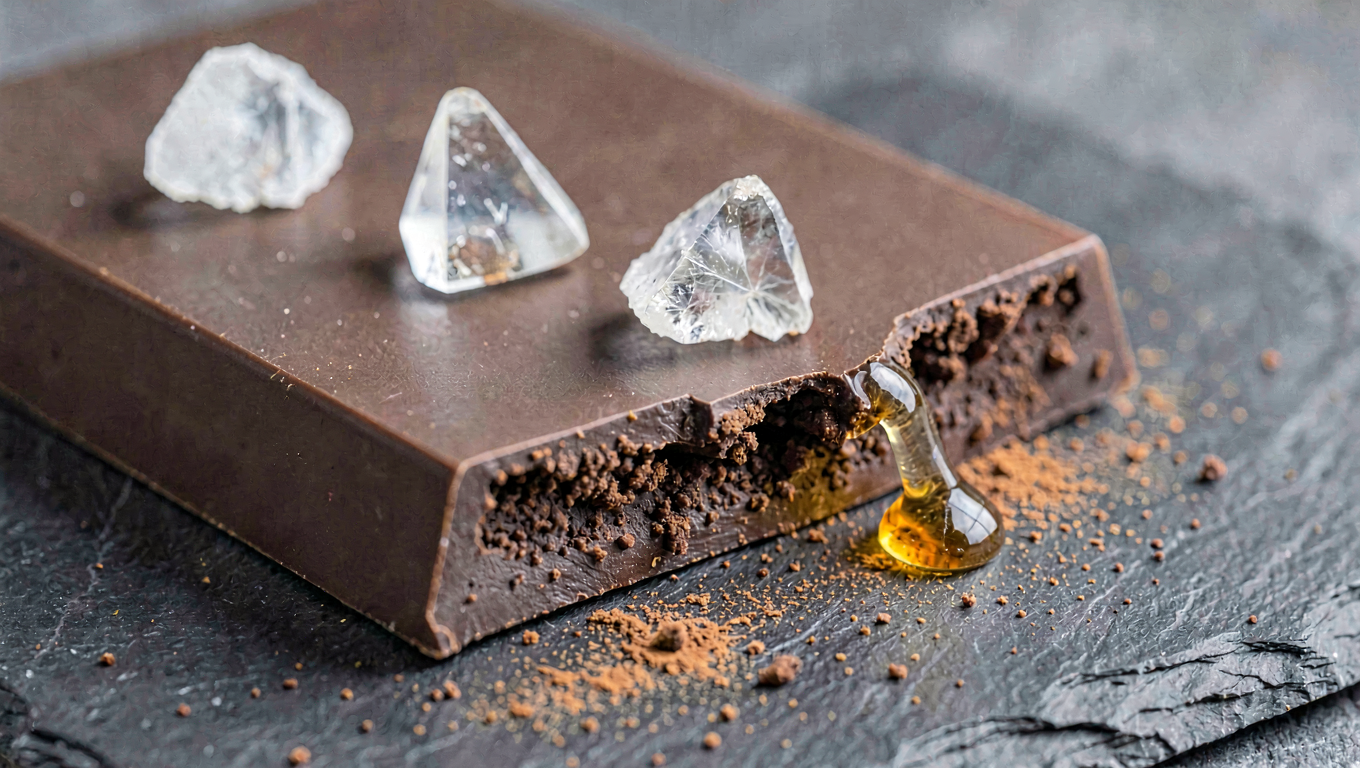
Contrasting a dry, brittle fracture edge (microscopic cocoa crumbs) against high-viscosity amber honey and translucent pyramidal salt crystals prevents the melted-wax look common in AI food photography.
A macro studio still life of a thick fractured shard of 85% single-origin dark chocolate. The broken edge reveals an authentic, razor-sharp crystalline snap fracture with fine microscopic cocoa crumbs. Resting on the angled matte top surface are three delicate, translucent pyramidal Maldon sea salt flakes and a single slow, viscous bead of raw amber acacia honey catching a crisp pin-point studio highlight. The chocolate rests on a cool slab of honed dark gray slate stone dusted with a faint haze of bitter cocoa powder. Precision editorial lighting with a narrow snoot rim light highlighting the honey droplet and salt facet edges. Shot on 105mm macro at f/5.6, razor-sharp focus on the salt crystal, true organic tactile depth.
What actually made the difference
1) Name the contact boundary: spherical droplets clinging to glass, a meniscus at the rim, or honey pooling on slate. 2) Name the tooling, not the quality: diamond knurling, bead-blasted titanium, hairline fissures, and honed slate beat "8k masterpiece" every time. 3) Specify reflection color: magenta/cyan coatings and golden caustics give the lighting physical direction.
Know a trick other creators should learn?